
Services · Part marking
Serial number and Data Matrix marking on metal
We laser mark serial numbers, part and lot numbers, Data Matrix codes, QR codes and barcodes directly into parts, tags and data plates made of stainless steel, carbon steel, aluminum, copper, brass and titanium, on raw metal or through paint. Values come straight from your spreadsheet, and the sample is checked to confirm every code scans before the run. Runs of 50 pieces or more, marked in Houston and shipped nationwide.
What we mark
Traceability marks that are part of the metal
Serial numbers
Sequential serials or a unique value on every piece, pulled row by row from your Excel or CSV file so no number is typed by hand.
Part and lot numbers
Part numbers, lot or batch codes and dates, laid out with any fixed text your spec calls for.
Data Matrix and other 2D codes
Data Matrix is the square 2D code common in industrial part marking. It can hold a part number, lot and serial together in a small area, and built-in error correction lets a scanner read it even if part of the code is scuffed.
QR codes
Useful when the code should open a web page, such as a procedure, manual or asset record, from any phone camera.
Barcodes
Linear barcodes for systems that read 1D codes, marked at the size and quiet zone your scanner needs.
Text and code together
Human-readable text next to the code, so the part can be identified with or without a scanner.
Codes and serials we've marked
Every photo is a part we marked on our own laser.
By metal
How each metal takes a code
Stainless steel
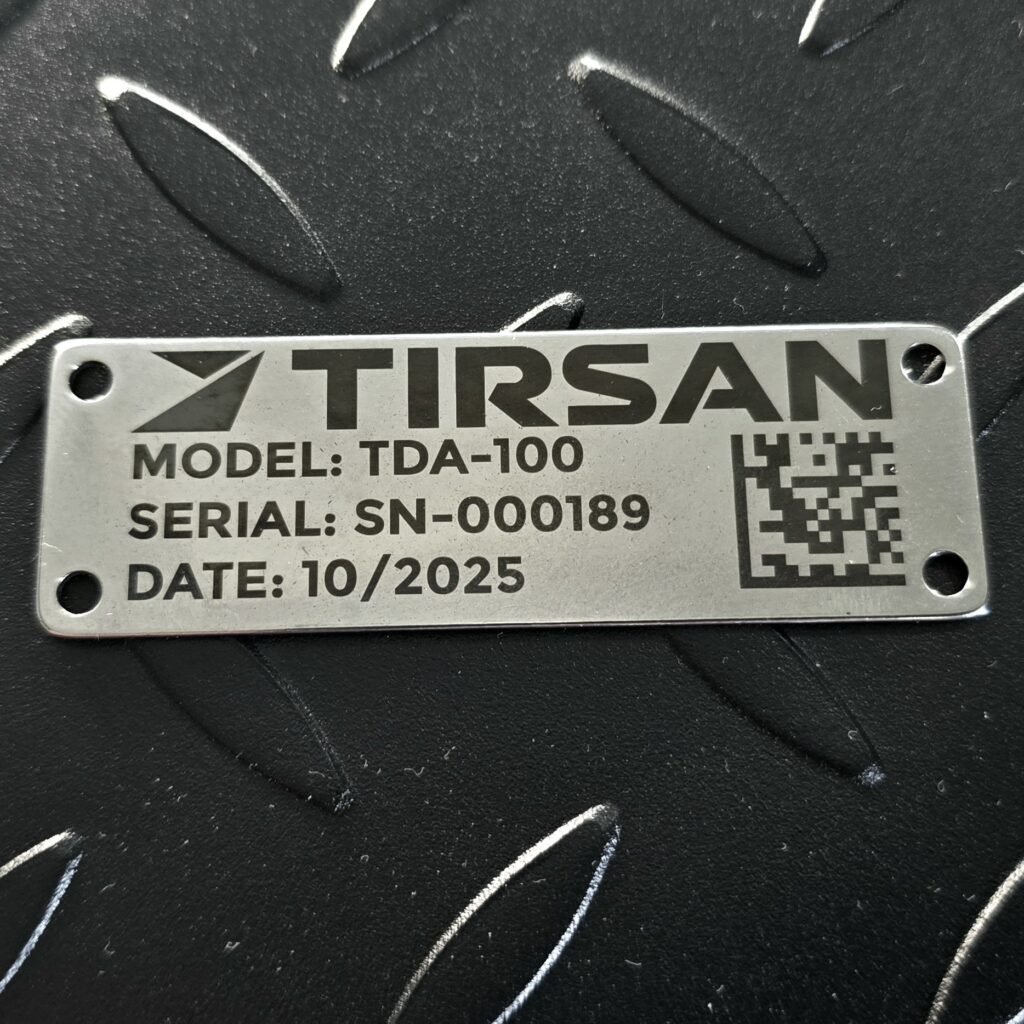
Black anneal darkens the surface without removing material, so the part stays smooth and the code has strong contrast for scanning.
Anodized aluminum
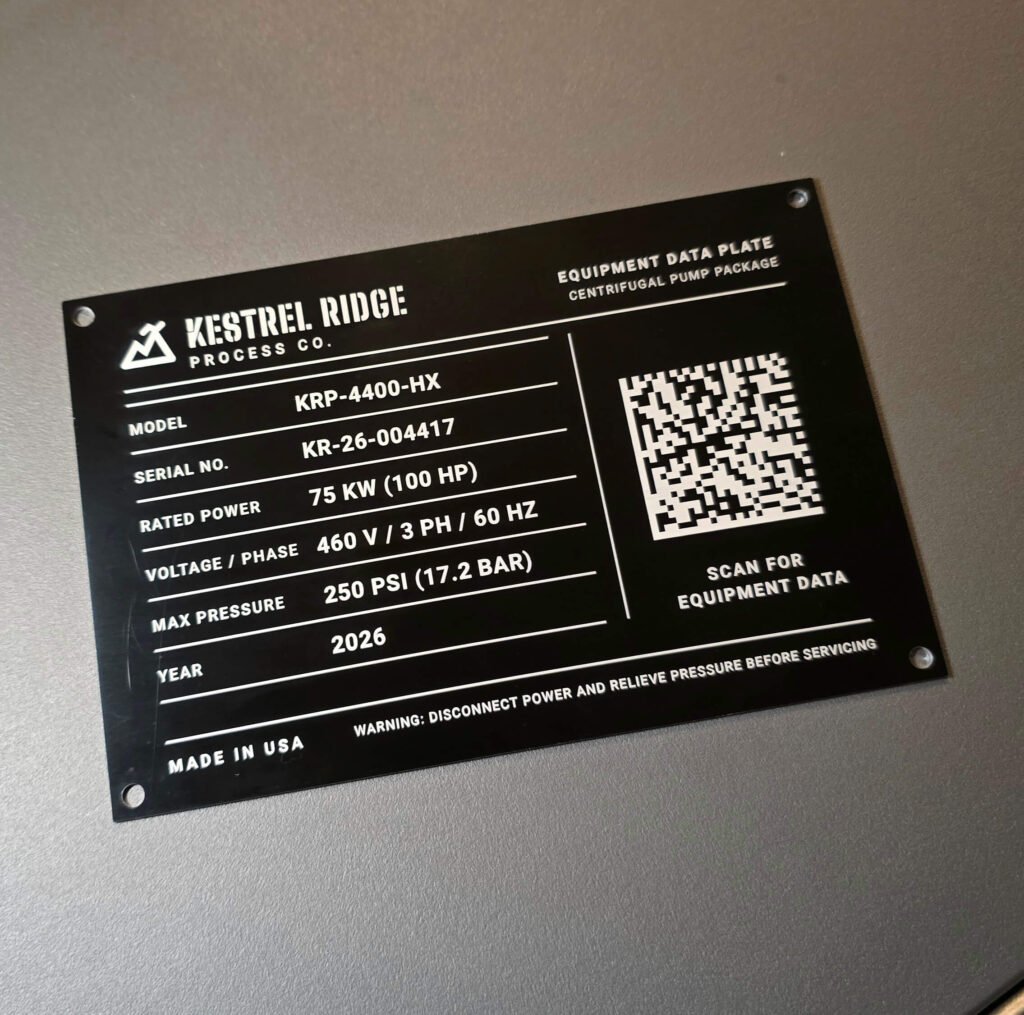
The laser etches through the anodized layer to bare aluminum, giving bright marks on black or colored plates.
Copper
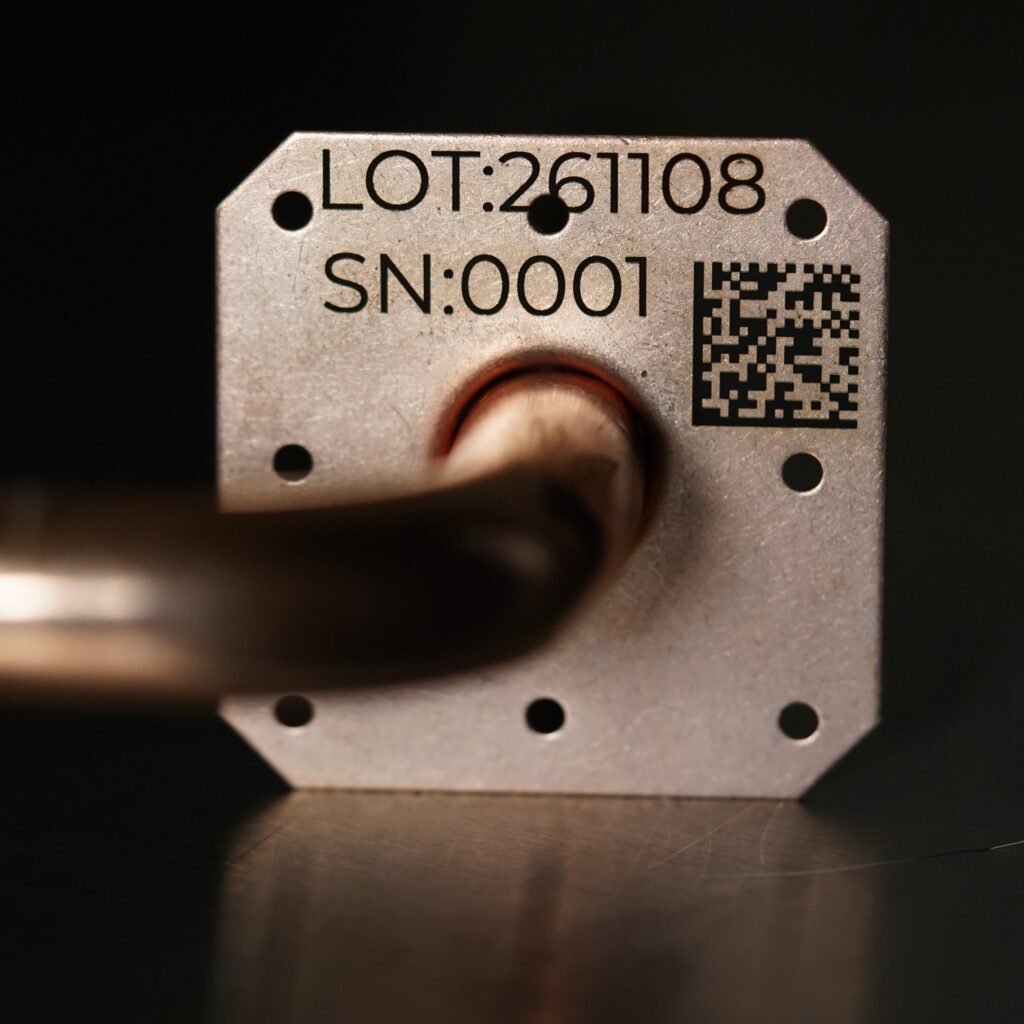
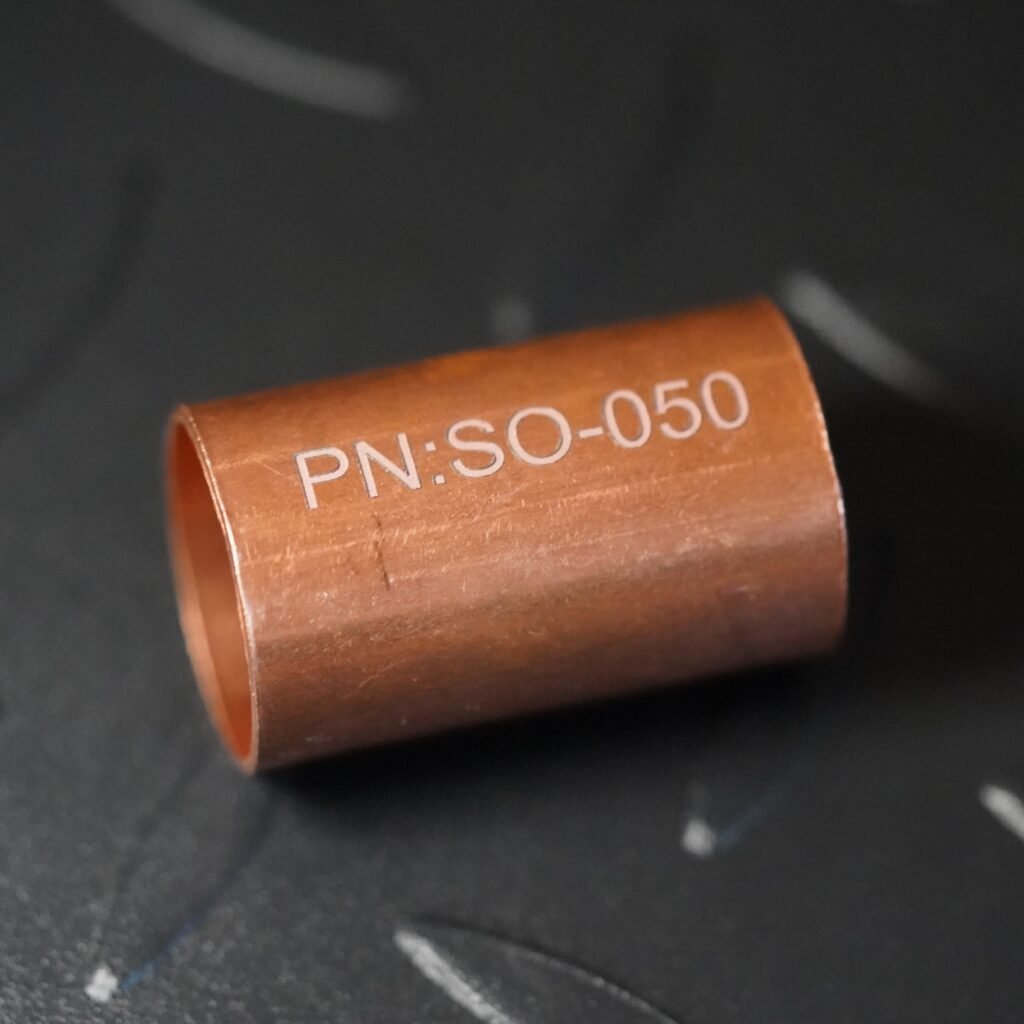
A black mark for scanning contrast, or an engraving cut into the metal. Engraved characters stay readable as relief when the copper tarnishes.
Painted and coated parts
The laser removes the paint or coating down to bare metal, so text and codes show as bright metal against the paint color, as on our aircraft medium gray flight control panel.
Variable data
From your spreadsheet to marked parts
-
1
Send your list
An Excel or CSV file with one row per part: Serial, part number, lot, code contents, whatever changes piece to piece.
-
2
Approve the layout
We lay out the text and code to your spec and send a mockup filled with real rows from your list.
-
3
Approve a sample
We mark one part so you can check size, contrast and that every code scans.
-
4
Run and check
Each part gets its own row from the file and is inspected against the approved sample as it comes off the laser.
- Codes Data Matrix, QR, barcodes
- Metals Stainless and carbon steel, aluminum, copper, brass, titanium
- Variable data Excel or CSV
- Minimum 50 pieces
- Marking area Up to 6.9 x 6.9 in (175 mm); 4.3 x 4.3 in (110 mm) on our fine-detail lens
Serial number and code marking questions
How do you mark a serial number on metal?
We choose the method for the metal and finish: A dark mark or etch where contrast matters most, an engraving where the part sees heavy wear. Then we lay out the serial, and any code, from your spreadsheet, mark one sample so you can check size, contrast and that the code scans, and run the batch with each part taking the next row from the file.
What can a Data Matrix code hold?
Any text or numbers you choose, such as a part number, lot and serial together, or a web address. On our copper sample, the code holds the same lot and serial number printed beside it, so the part reads the same with or without a scanner.
Do you use a different lens for small codes and text?
Yes. We run two field lenses on our fiber laser. The F-254 lens marks up to 6.9 x 6.9 in for logos, plates and larger batches. The F-160 lens has a smaller 4.3 x 4.3 in field and a finer spot, for small text and small Data Matrix codes. Codes read by phone cameras usually don't need it; dedicated 2D readers can read the smaller codes it makes.
Which marking method is best for codes?
Scanners need contrast, so a dark mark, like a black laser anneal on stainless steel, usually reads best. Engraving removes material and holds up to heavier wear, but it has less contrast. We choose based on your part and how it's used, and you check the result on your sample before the run.
Will the mark survive tarnish, corrosion or wear?
A laser mark is part of the metal, so it can't peel off like a label. On our engraved copper sleeve, the part number is cut about 0.03 mm into the metal, so the characters stay readable as relief when the surface tarnishes. If your parts see specific chemicals, heat or abrasion, tell us and we'll test on a sample first.
Can you mark raw metal and painted parts?
Yes. Raw, unfinished metal is marked directly, like the copper sleeve in our photos. On painted or coated parts, the laser removes the paint down to bare metal, so the text or code shows as bright metal against the paint color. Our flight control panel shows this in aircraft medium gray.
Do you check that the codes scan?
Yes. The sample is scanned before you approve it, and every part in the run is inspected against that approved sample as it comes off the laser.
Can you mark codes on parts we supply?
Yes. Once the mockup is approved, mail your parts or drop them off. We mark one as a sample, and the full run starts after you approve it.
What's the minimum order and turnaround?
50 pieces. Most runs ship 3 to 5 business days after you approve the sample. See how pricing works for what affects the cost.
Have parts that need serials or codes?
Send the part, material, quantity and your spreadsheet if you have one. We'll reply with a quote or the questions we need answered first.
Get a Quote